last week jim expressed frustration at the repeated sameness...i gave that much thought... and here is what i think...i can not express the mindset of what i do any better than the combo of theses two...''why setup selection is key to decreasing cognitive overload'' @ www.stockbee.blogspot.com .... and www.zenhabits.net/one-thing....
this is where i take my stand...trading a set of predefined setups at the geometry.... everything flows from that point.... and all else falls away... yes there are details upon details...perhaps no one can do what i do...in the end i am trying to find a simple way to get from A to B.
EVERY THOUGHT i use has been explained at this forum..
recently i added some elliot work to my index thought process... but all i ask of it is this... if elliot has important pivot... do i have a trade signal...?
so what do i do? keep showing as i do?
JI
jimkane
Rep: 3,058
Posts: 33,089
I feel guilty asking roofer any questions, thinking of him in a body cast, straining to answer an inane question from Jim...
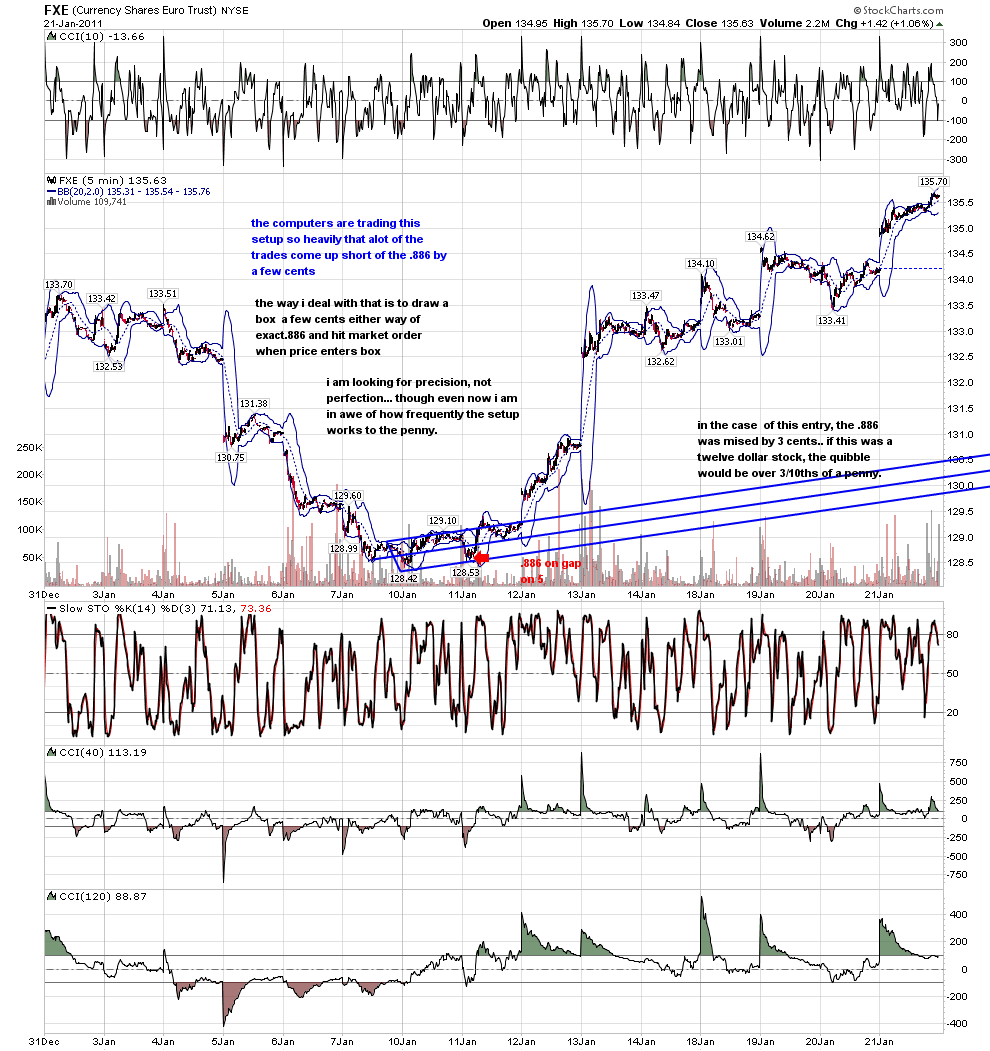
So, the chart and notes are crystal clear, nothing ambiguous on there at all. Only Jim could find a question amongst such clarity. The answer to my question, too, seems to already be there, so I'll morph my question into another one, to cover that issue.
Do you use the few cents (two cents it appears, since the example shown was a miss at 3 cents away), regardless of price? It appears so. I'd assume this is because regardless of the price you've seen the algos hit up to two cents away, and not more (usually), regardless of price? Hence, if it is a $12 stock, or GOOG or PCLN, no matter, it's always two cents? I'd be tempted to do it on a percentage basis. I guess, though, if experience has shown they hit it within two cents regardless of price, then that's the answer.
So, the only question of the above that I'm asking for an answer to is: why don't you use a higher tolerance for higher priced stocks, is it because you have found the computers don't?
RO
roofer
Rep: 3,689
Posts: 3,574
well i thought i had explained this......different swings different number.... usually 5 cents... higher price stocks aapl. amzn... 10 cents....
JI
jimkane
Rep: 3,058
Posts: 33,089
You probably did and I just didn't keep good enough notes... I guess I'm about as bad of a student as all those I complain about...
RO
roofer
Rep: 3,689
Posts: 3,574
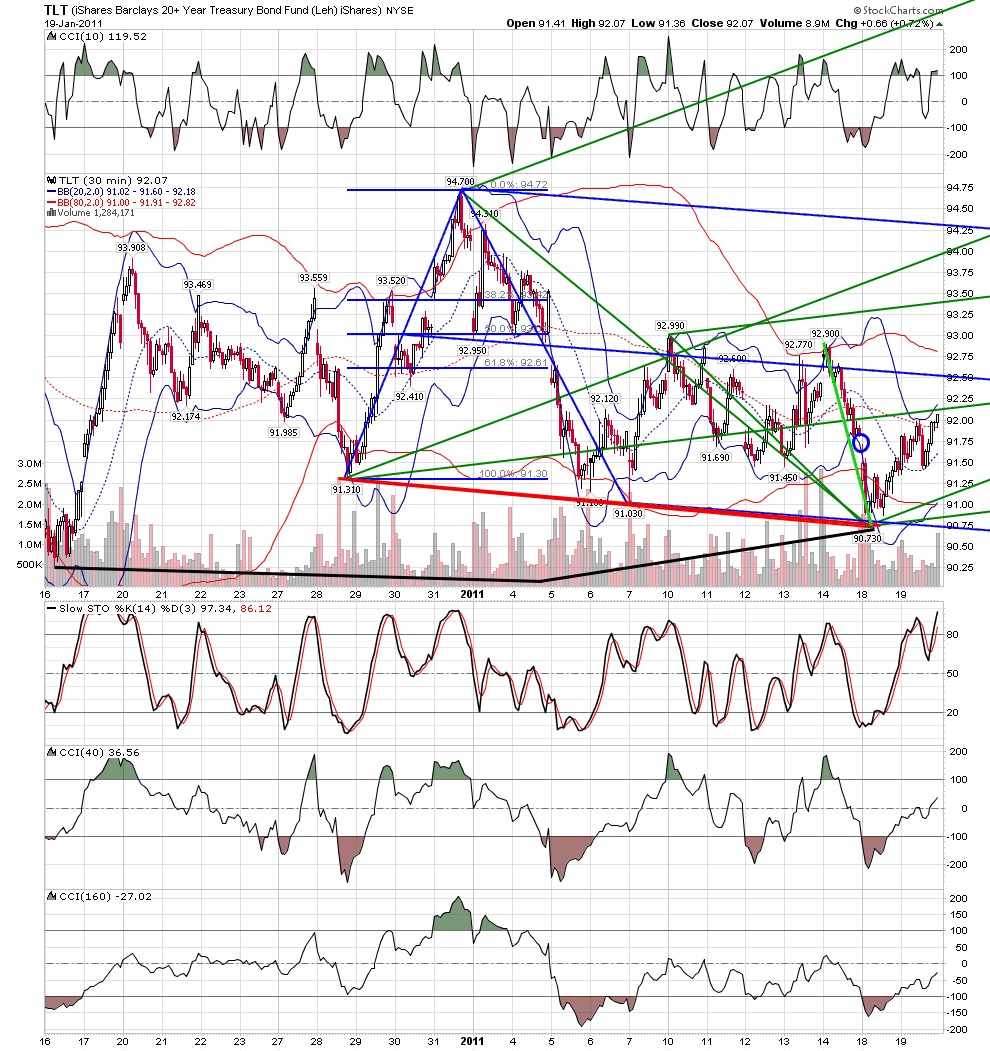
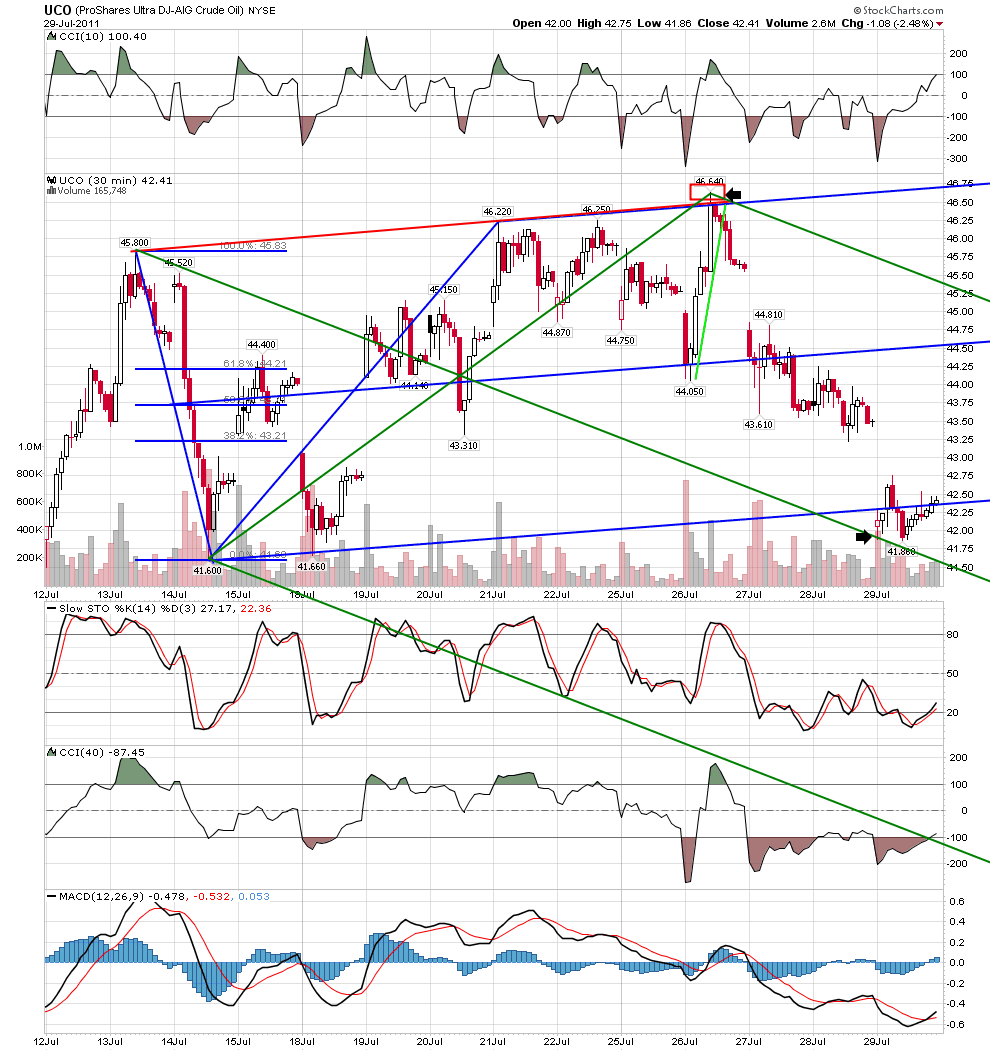
i do what i do because i collect...then i look for what has happened before to happen again....i remembered the setup in UCO from a setup in TLT that i posted in this forum... but i also remember what happened afterwards in TLT.. WAS THE TRADE WORTH IT ... YES but was it worth overstaying the target... not in the TLT example... not in the UCO EXAMPLE...
Click image for original size
Click image for original size