RO
roofer
Rep: 3,689
Posts: 3,574
think of it this way,,, we are offered thousands of trades a year. each trade offers a minimum if 5/1 reward of initial risk...if we make a buck on 20 trades by holding for target and lose 20 cents on 80 trades... we're still making money...the minute we use a trailing stop we lose the mathematical edge.
RA
rat89
Rep: 0
Posts: 7,015
Yeah, I caught the top in spy within 20 cents last Friday and rode it to midweek. After that the computers fooled me because of the areas hit on the 5 min charts. This is something I've seen before, when small timeframe setups fail you have to stay with the bigger timeframe. Also, after a time of not allowing price to move in one direction it is always hard to shake the feeling that they will come in for it and that's exactly when they don't. Thanks for the charts roofer.
RA
rat89
Rep: 0
Posts: 7,015
That is exactly the way to think about it
Originally posted by roofer
think of it this way,,, we are offered thousands of trades a year. each trade offers a minimum if 5/1 reward of initial risk...if we make a buck on 20 trades by holding for target and lose 20 cents on 80 trades... we're still making money...the minute we use a trailing stop we lose the mathematical edge.
AL
albert
Rep: 99
Posts: 3,094
Wow. Well, I guess I wimpout too much. roofer has more content, steel, and command in his rants than I do in my trading career. Impressive work and words, roofer. I will study them thoroughly.
Respectfully,
Al Kamego
Respectfully,
Al Kamego
JI
jimkane
Rep: 3,058
Posts: 33,089
Originally posted by roofer
think of it this way,,, we are offered thousands of trades a year. each trade offers a minimum if 5/1 reward of initial risk...if we make a buck on 20 trades by holding for target and lose 20 cents on 80 trades... we're still making money...the minute we use a trailing stop we lose the mathematical edge.
Boy, roofer, I have so much to say on this topic, but I think it probably wouldn't serve the forum (or be the best use of my time) to lay it all out. I was getting ready to comment on what you had said up to this point when I saw this new post just now. So, I guess I will throw out my comments on this one, and add in an abbreviated synopsis of what I was going to post, and leave it at that.
First, let me point out that what you just said here is not accurate. It has the potential, for some, to be accurate, but in general it is not (please don’t take offense). Here's why. A properly executed trailing stop, based on extensive understanding of market harmonics and frequencies (the basis for all of my recent work and discoveries), will take a huge chunk of those 80 losing trades and make them profitable, just not ‘full target’ profitable.
Let's look at a hypothetical example. I can create one to show my point, and I can just as easily create one to show roofer's. The point is one has to see, based on how they pick trades, which method is better for them. One case is as roofer lays out, 5/1 and 20% winners. Let's look at another case where we have that same 5/1, but the trader trails a stop so they hit only 5% to target (not 20%), but those losers now become 75% winners, and we'll split those into 25% at 1/1, 25% at 2/1, and 25% at 3/1. That still leaves 20% as full stop outs. I am not even looking at any hitting at say 4/1, to make the example as conservative as possible. To me, this is not an unrealistic possibility. Maybe I'm totally wrong about that. But, for the sake of the argument, let's look at that example. Is the edge gone?
Here’s the math. You don’t need to understand this, but it is simply the ‘expected value’ calculation from probability theory. I show it in Trade Management, and you can Google it if you want.
Scenario #1: (1*.2) + (-.20*.8) = 0.04
This implies the average, over all trades, is 4 cents per trade, a nice edge.
Scenario #2: (.20*.25) + (.40*.25) + (.60*.25) + (1*.05) + (-.20*.20) = 0.31
Hmmm, this scenario has almost eight times the ‘edge’ as the above. Trailing stops not only didn’t ruin the edge, it exploded it.
Let’s look at an even simpler example. 20% stop outs, 5% at target, the remaining hit at 2.5/1, half way to target.
Scenario #3: (.75*.50) + (1*.05) + (-.20*.20) = .385
Wow, in this simple scenario the ‘edge’ is even greater, almost 10X the target approach. Not only does trailing the stop and having it get hit like crazy do better, it does way better.
Now, let me analyze this a bit. The reason it does better is because roofer’s example has a very low initial winning percentage. In cases like that, trailing the stop will significantly outperform waiting for the target (with a lot of assumptions, only one of which is that the nature of the setups is that there are lots of initial moves that peter out and may or may not eventually get to target, as I have found in my trading with my setups). This is, again, in my experience. I’ve ‘Been there, done that’ in my estimated over 40,000+ hours.
Alas, though, I would think roofer would come back and say he was just choosing an extreme, made up example to show how you have an edge in waiting for target even at only 20% winners. He stated the winning percentage for the .382 ABCD at geo setup is 87%. If you did a similar comparison with trailing a stop against something that hits target 87% of the time, trailing stops would likely underperform, and to an extremely significant amount I would think. So, where does this leave us?
If your winning percentage is very high, target only trading would, in my experience and opinion, be the way to go. If you find you rarely get to target, have a lot of moves that go part of the way, and stop outs are not the majority of the moves (let’s say in the 10% or maybe even 20% range), trailing stops will likely greatly outperform target trading. This just makes common sense, given the two scenarios I just explained, right?
I have found that, for me, I strongly (strongly) fall more into the latter category. To me, hitting ‘target’ is a somewhat rare occurrence that I savor when it happens once in awhile. Getting a move underway that ‘disappoints’, that’s the norm. Getting a full stop out, I find that fairly uncommon. I am not making any claims here, but I have said in trading conversations with buddies who trade similarly to my style, as an opinion only, if you are taking more than say 10% full stop outs, something is wrong. For this methodology as I see it. That greatly suggests, though, that trailing stops are a much better approach with those kinds of stats.
Now, on to some comments on the previous roofer posts. It is tremendously impressive to me that roofer can hit 87% on those .382 ABCD at geo setups. I’m sure he has very similar stats on the .886 gap on 5 at geo. What I have found, for me, is that my stats would be much lower. Much, much lower. If I use a tight stop like roofer I tend to get stopped out almost every single time. And not only that, most of those are with the price action just sailing right through the area. I ‘solved’ that by using a high confirmation entry trigger, hence ‘paying way up’ for the much greater technical confirmation. I also get the stop well outside essentially all the technical factors I have in the PTA (a ‘wider stop’). That usually leaves me with a R/R of about 3/1 to ‘target’, which I ‘rarely’ hit. It’s not a matter of being patient, it’s a matter of it’s just not meant to be in most cases, in my experience, with my setups.
Truth be told, I’m thinking, my setups just aren’t near as good as roofer’s. I don’t have the skill he has. I can’t even begin to fathom hitting 87% to target on anything I do. I have done the best I can to optimize the skills I have, and trailing stops do that for me. If I try to do things as roofer lays them out (believe me, I’ve tried and tried and tried), I bleed cash like AMZN in the early days. Like a BS Internet startup getting ready for a BS IPO. I could wipe out Bill Gates’ fortune in short order. So, as we all have to do, we have to come up with our own plans. I can’t be roofer. I can’t do what roofer does. He has said he can’t see my ‘adjusted’ sets in real time. In that vein, I can’t do his stuff in real time, only in hindsight. But, I feel, I can do my stuff in real time, and I understand my edge. I think I understand it extraordinarily well. And without trailing stops I would have to retire instantaneously.
So, I hope this clarifies what roofer does a bit (via the answers he so generously posted for us), and why I do what I do, and why ‘never the twain shall meet’. Study what you do, look at where your edge comes from, what your setups do for you, and construct your comprehensive ‘Trading Plan’ around that. You’d be surprised how many people have all or most of the pieces, and just don’t understand how critical it is to make choices and put the choices together into a plan. Their plans just don’t work for them, and they don’t know why. The above is one little piece of why that may be. It’s like having the spare parts for two cars (or, in reality, many cars) and trying to put them together to make one car. The parts don’t fit together, they aren’t compatible. Find the right parts for your plan, and make sure they complement each other, that they act synergistically.
And that’s ‘The World According to Jim’.
RO
roofer
Rep: 3,689
Posts: 3,574
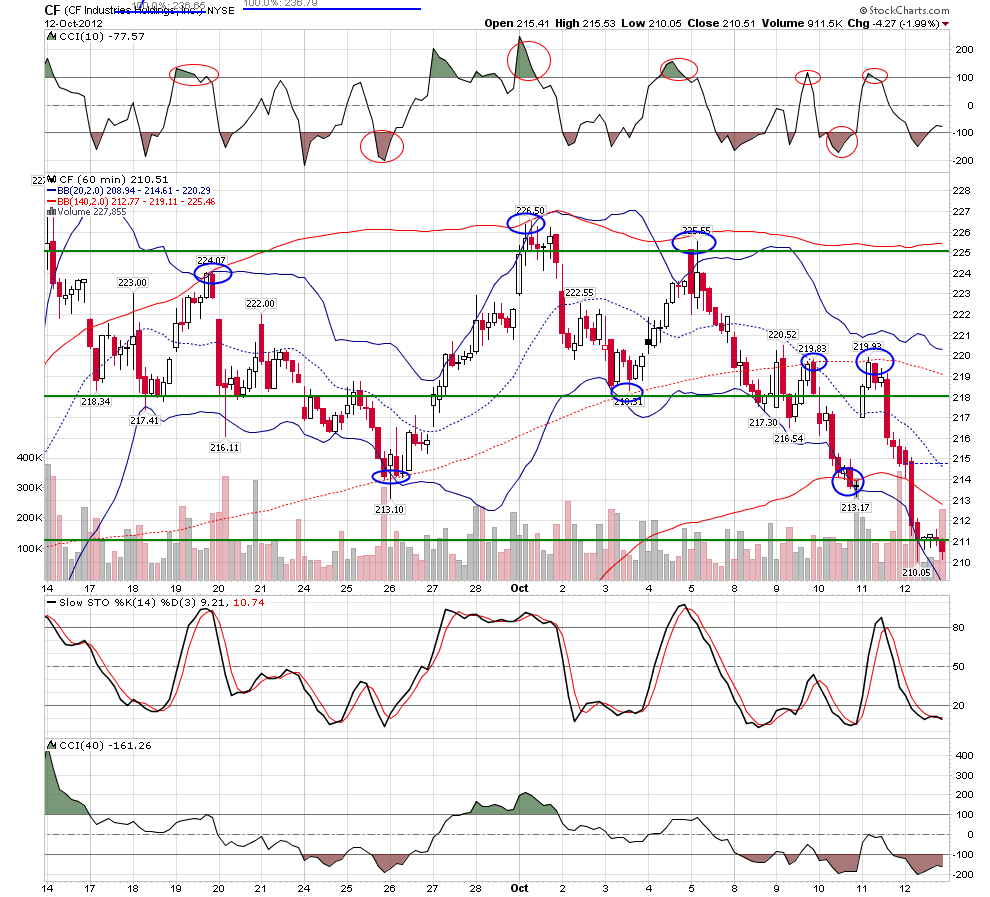
jim- i have 2 simple questions...was any choice i made not knowable in advance by what has been shown here?did you ever do the the band and indicator work i showed?we can not know in advance where price is going.... but we can know IN ADVANCE where the medianline, fib, gann, indicator, and band traders are looking to trade ...at the same time
RO
roofer
Rep: 3,689
Posts: 3,574
we know in advance that band traders look for price pivots at the coming together of price with bands and indicators( circled areas)
we know in advance where the gann is( green lines)
we know in advance where the gann is( green lines)
FI
fib21
Rep: 0
Posts: 40
Well said Jim the numbers speak for themselves. This is exactly my thoughts on roofers comments.
RO
roofer
Rep: 3,689
Posts: 3,574
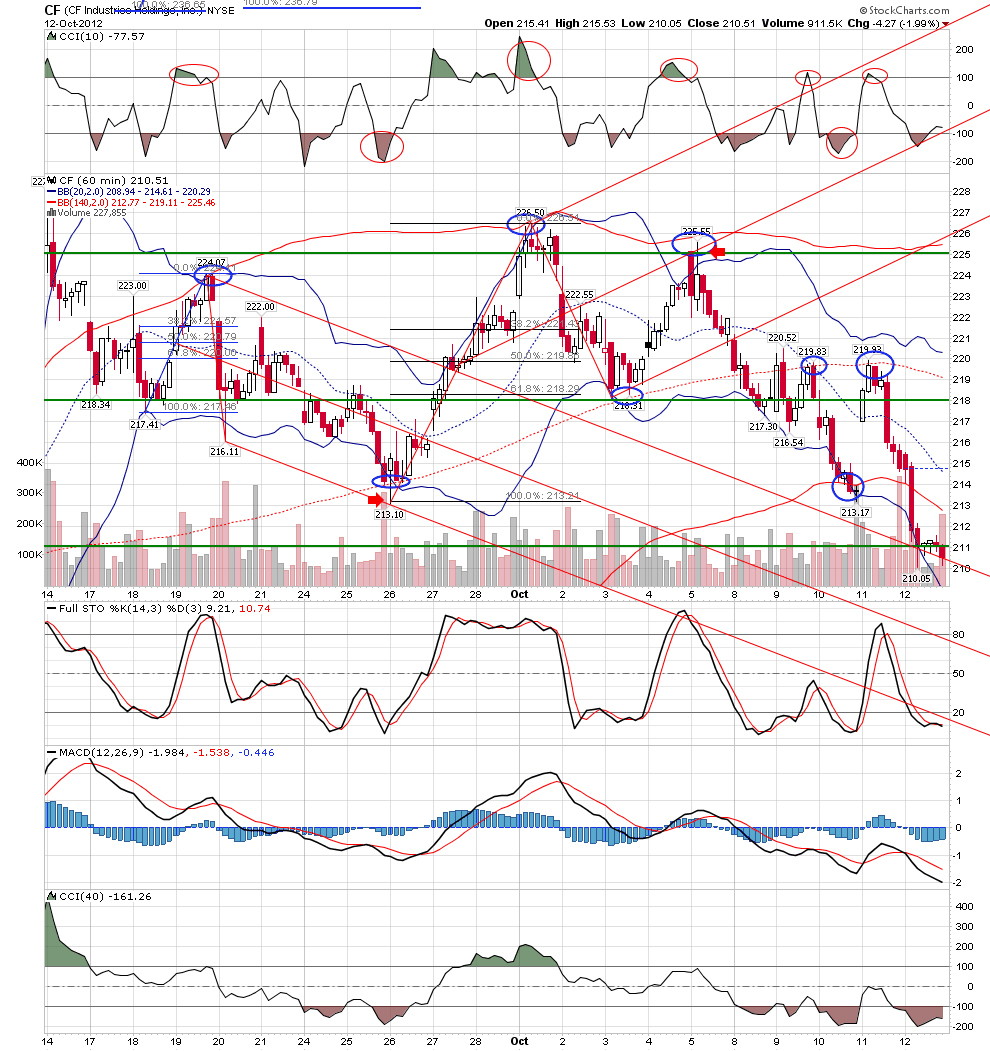
we know IN ADVANCE the rule for modified schiff sets..'' sharp moves back to back or strong moves relative to previous and subsequent price action call for the use of modified schiff set to project target and possible turning point''
Click image for original size
RA
rat89
Rep: 0
Posts: 7,015
I have a lot to say about this thread but unfortunately no time... Awesome material here from roofer. It make sense that a traders style and psyche have to fit the trading approach since we all see things differently. That wouldn't negate the concept that there is in fact an absolute best use of the tools....but can we all see it in real time....that in itself is an art