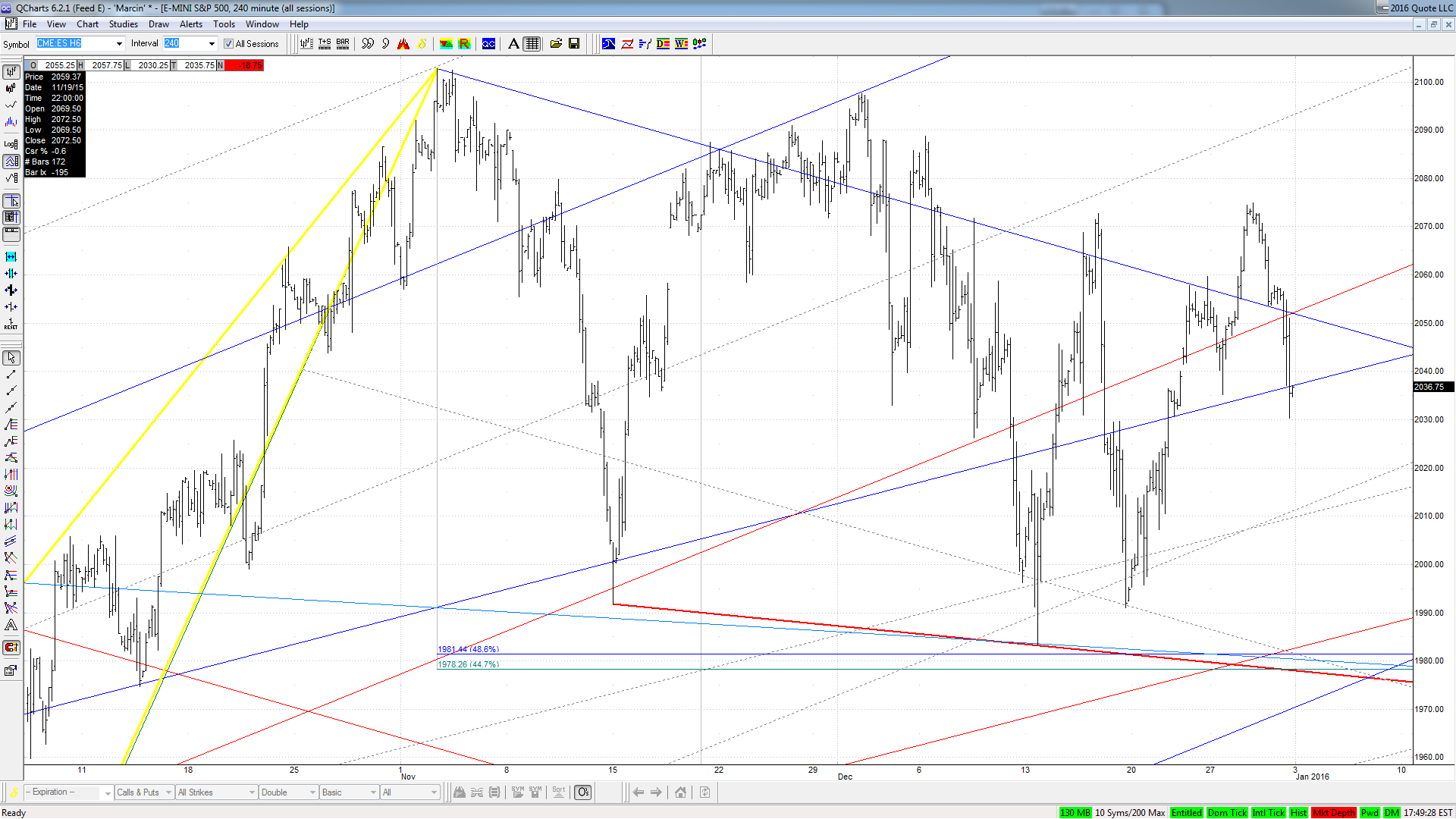
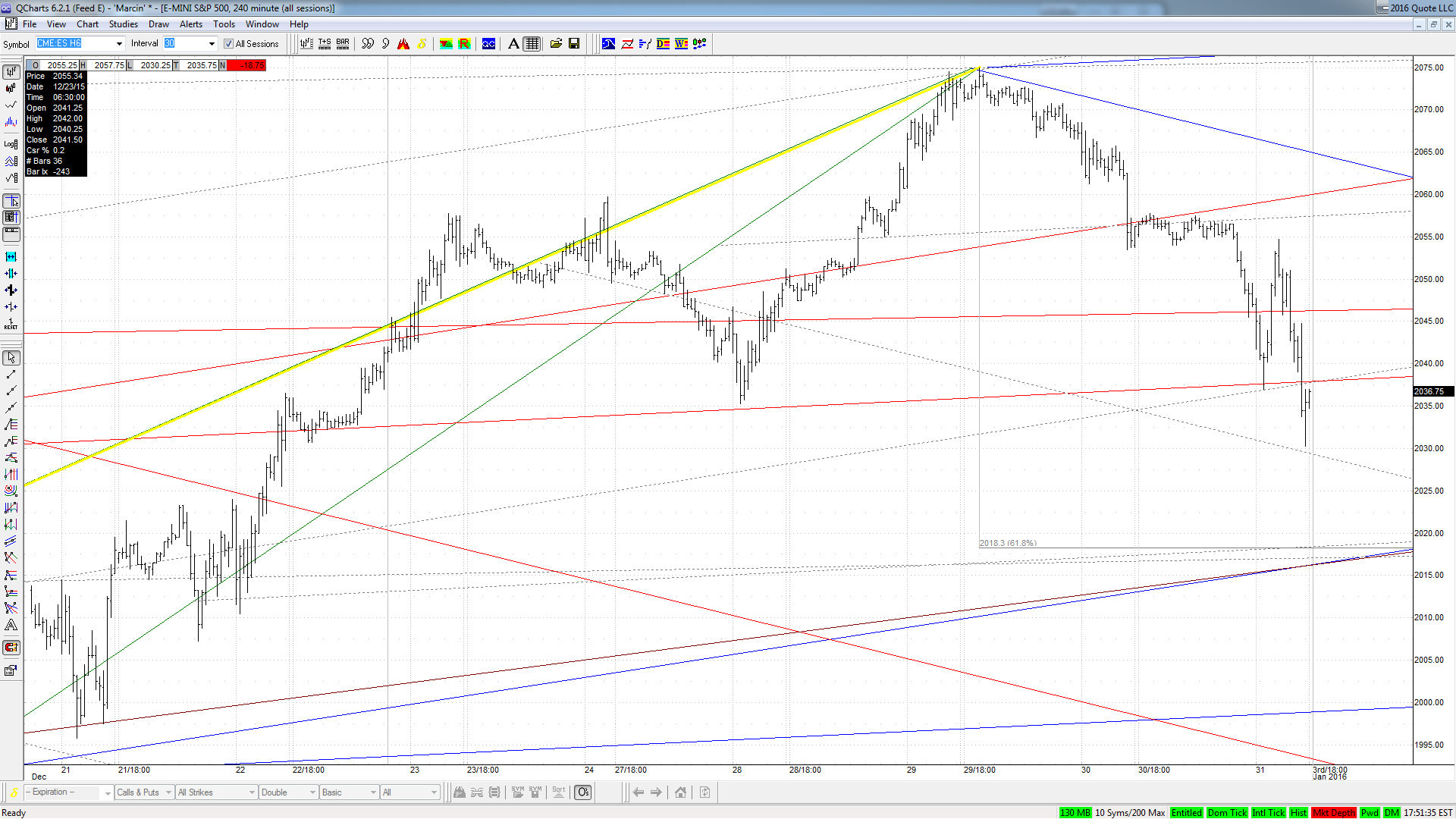
My guess is that they want to test the previous low in the ES, so my most optimistic area is between 76 and 82.
Click image for original size
Key supports on the way down are at 18 and 6-7.
Click image for original size
Click image for original size
MA
MarcinO
Rep: 67
Posts: 5,506
0
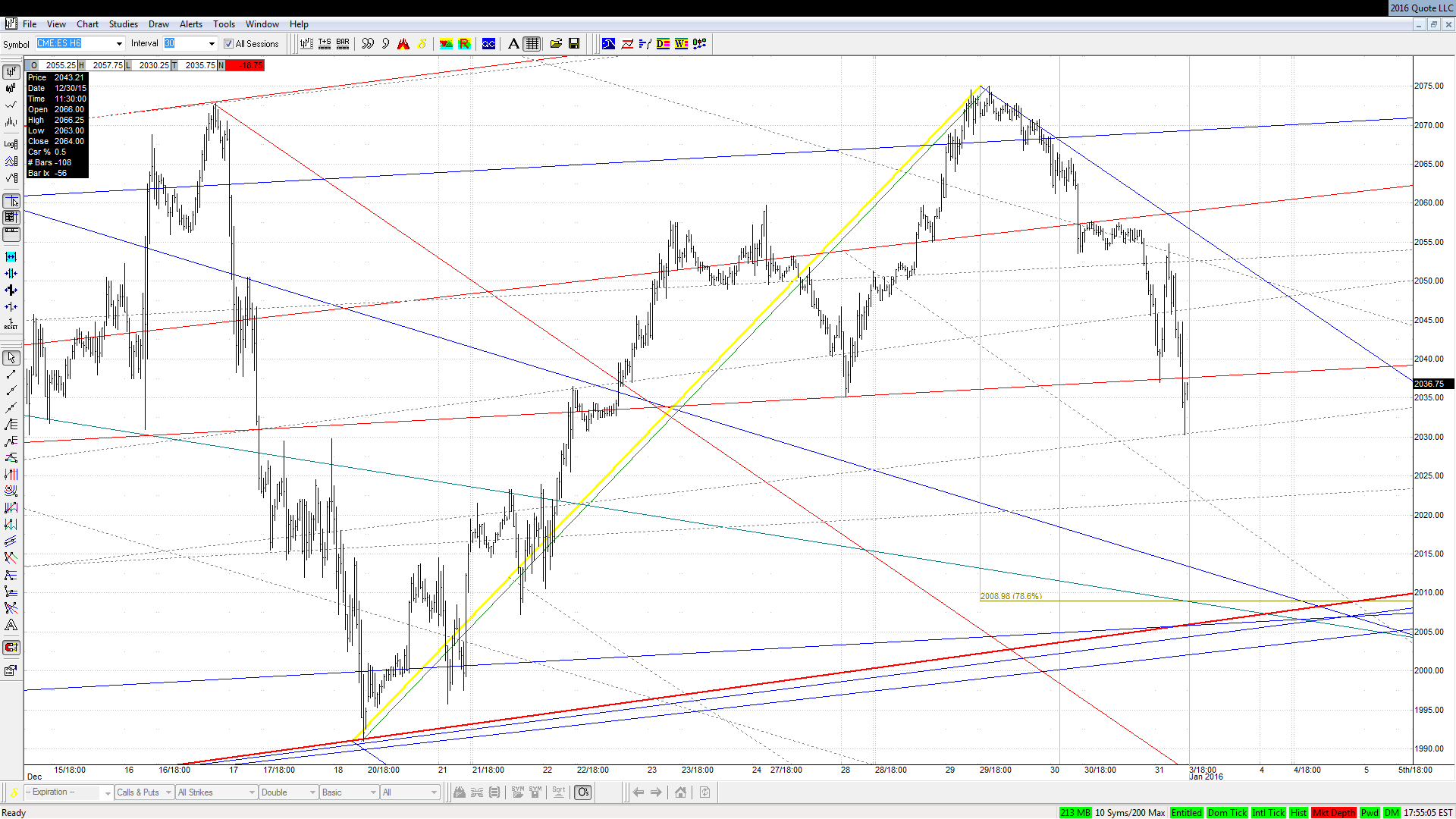
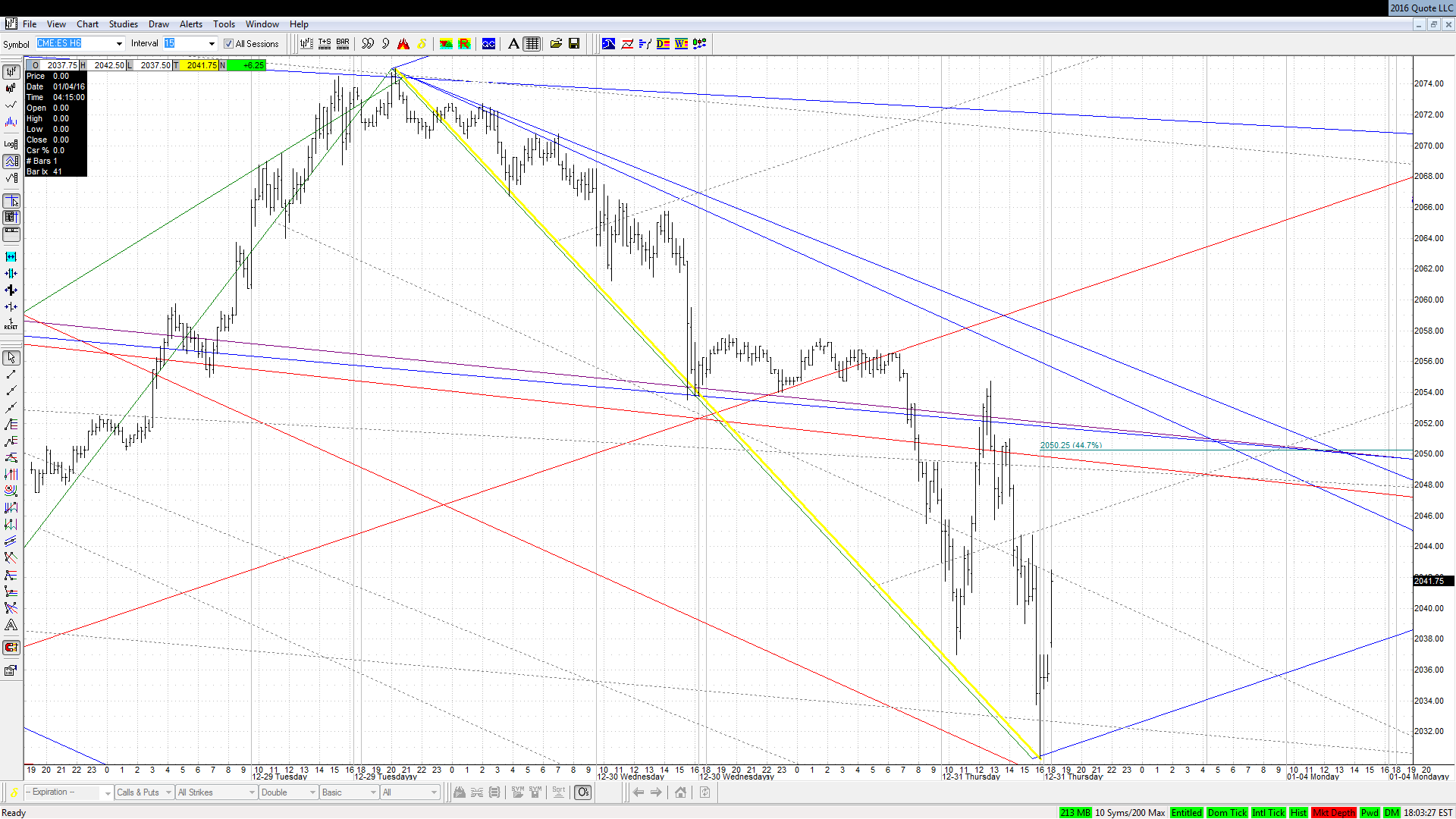
The question is, where will current correction end?
48-50 on European open tomorrow seems considerable.
Click image for original size
MA
MarcinO
Rep: 67
Posts: 5,506
0
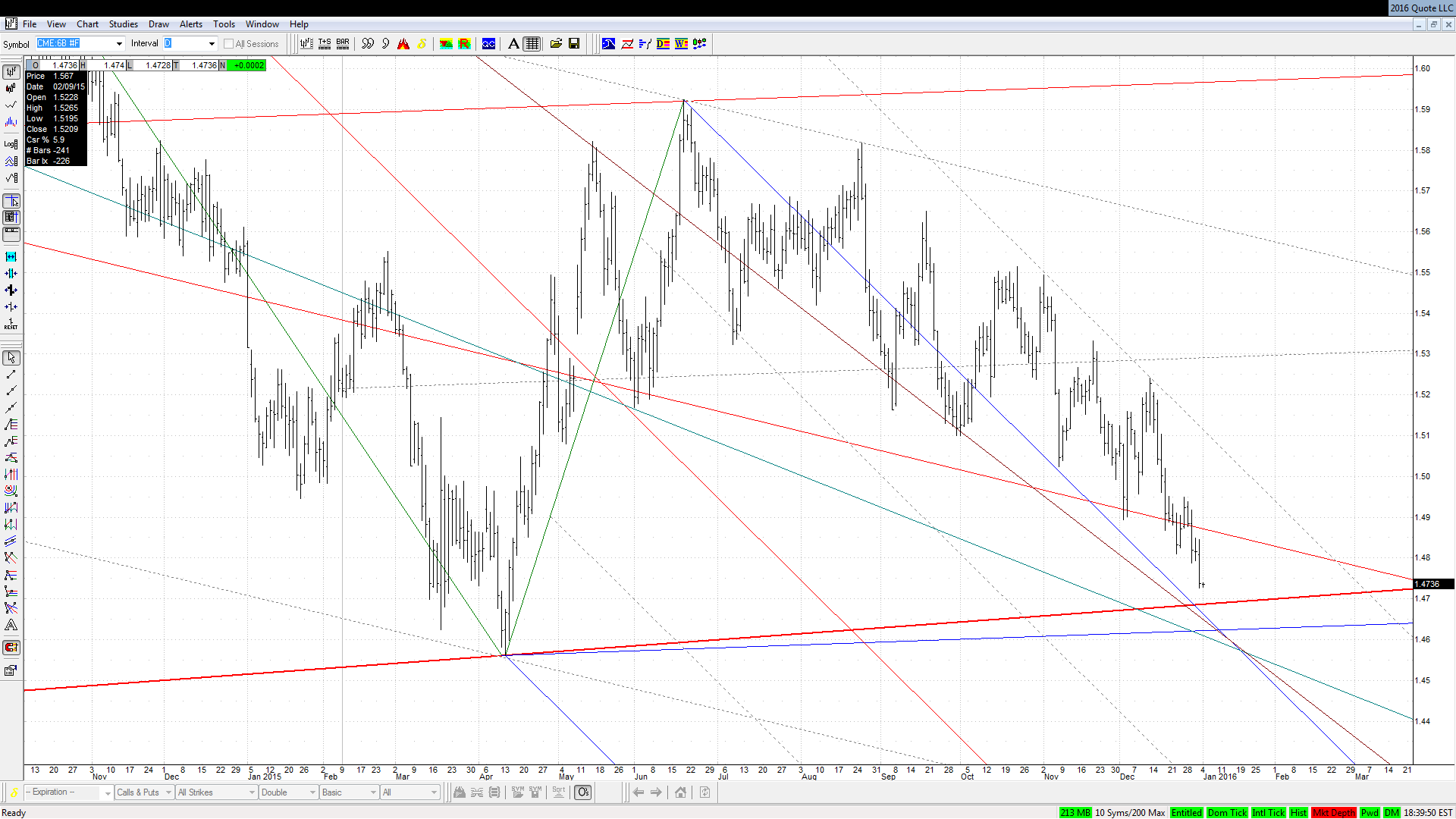
The level discussed last week here for the Cable is between 1.4600 and 60s-70s. Here, for the sake of clarity I'm showing only key lines intersection, just above 1.46.
Click image for original size
MA
MarcinO
Rep: 67
Posts: 5,506
0
Jim, due to time difference, usually I read your posts from last tradind day in a week, only on Saturday or Sunday, so I can refer to them only in new topic discussion.
Thanks a lot for giving details on flipping a position. Very useful post, also in terms of price action analysis after a transaction has been triggered.
JI
jimkane
Rep: 3,058
Posts: 33,089
0
Very nice chartwork, Marcin.
JI
jimkane
Rep: 3,058
Posts: 33,089
0
I'm glad you find it useful.
Originally posted by MarcinO
Jim, due to time difference, usually I read your posts from last tradind day in a week, only on Saturday or Sunday, so I can refer to them only in new topic discussion.
Thanks a lot for giving details on flipping a position. Very useful post, also in terms of price action analysis after a transaction has been triggered.
JI
jimkane
Rep: 3,058
Posts: 33,089
0
(Edited )
I use a ton of movie and song references when I teach. Most, I think, hate it, but some get my point and it helps them. One of my favorites is from what I consider the best trading song every written, 'The Gambler' as done by Kenny Rogers. (As an aside, the best trading movie ever done, in my opinion, is 'Rounders'.) Now although this isn't a perfect analogy, it's close (nothing can make a trade that instantly goes against you and stops you out a winner...).
"Every gambler knows that the secret to surviving, is knowing what to throw away, and knowing what to keep, 'cause every hand's a winner, and every hand's a loser..."
"You got to know when to hold 'em, know when to fold 'em, know when to walk away, and know when to run..."
If struggling traders could only grasp how much of this game depends not on just how great the trade setup is, but more what you do with it, it could help them get a different view that I think would help them on their journey. This is far more important than most realize.
I'm not sure how far off topic to go in this sojourn, but maybe a little farther. I am always amazed at how much I have been willing to do to develop my craft, and how little even some of my best students are willing to do. It reminds me of the story by 'Arnold' (that I won't retell in full right now) where the bottom line is some up and coming bodybuilder asked about how he built his calves, and he basically told him he wouldn't be willing to do what it takes. Not that he couldn't, that he wouldn't. Despite Tiger Woods' incredible natural talent, he was known for being the hardest worker on the tour (in his prime, of course).
So, I tell students about training exercises I've done, for hundreds, even thousands of hours. Sure, others tell stories of not doing all that work, even people in here occasionally, and how successful they are. For the rest of you, how's that approach working for you so far? My point is that if it's not working for you, maybe a hard work approach might be beneficial. Or, you could keep doing what you have been doing. Recall Einstein's definition of insanity, though...
One of the things I have done is using a simulator (I like to replay back past intraday ES action in say 3x, or 5x, or even 10+x speed), and randomly throwing myself in the market. Then I practice management. How many trades? I don't know, start out with 1,000, then go from there. Imagine if you could do this and stay break even. No setup, totally random entry (set a random time on a timer, when it goes off flip a coin, heads enter long, tails enter short, or any other random approach you can dream up), and you can manage so well you don't lose money! I'm not saying you can do this, I'm saying imagine if you could. What would your attitude be when you do this same thing with a solid setup and entry trigger? Yet not one student I am aware of has done this.
Here's another one. Practice buying dips (and selling rips). Use the same simulation approach, and once you sense a trend with room to run, try to sense when the dip is done and buy. Sell as the momentum fades (we don't care a lot yet about this part), and repeat. Same for the rips. Do this, oh, I don't know, about 10,000 times to start. Am I exaggerating? Not even a little bit. In sped-up mode (which also trains one to react, to feel, not over-analyze) one could do 200-300 trades in a long session easily. Could one do 100,000 of these over time? Absolutely. Yet not one single student I am aware of has even tried this no matter how many times I've persisted. Recall the movie 'Rudy'. When he talks to the priest he says, basically, in the end, succeed or fail, I want to be able to say I did everything I possibly could have. I feel I can say that. Can you?
So, if one has developed a feel for the rhythm of the movement by the above exercise, and has practiced being thrown in randomly and having to fight to stay alive, and has developed the confidence and skill to handle such situations with ease, how can that not be valuable? Useful. This has all been a part of my estimated 53,000 hours I now have at this craft. Sure, I'm naturally gifted, but I am also, in my opinion, the hardest working at this craft of anyone I've ever heard about. And I think that's a big factor in my skills. As roofer used to say (I'm paraphrasing here), time to do 10,000 charts, then get ready for the real work because you are now warmed up.
JI
jimkane
Rep: 3,058
Posts: 33,089
0
BTW, the ES really has a big swoooooooosh look to it, so I wonder is that the trap? Nowadays there is that extra burden to decide if it's a real read, or a fake. In 'the old days' almost all reads like this, in my experience, were genuine. Nowadays almost all are traps.
JI
jimkane
Rep: 3,058
Posts: 33,089
0
And this time swoooooosh meant swoooooosh. I think once the machines are turned off and this is allowed to trade freely (I only see this once the game (i.e. fake money printing pumped into the market) is completely over) this will be the norm again, what you see is what you get.
Originally posted by jimkane
BTW, the ES really has a big swoooooooosh look to it, so I wonder is that the trap? Nowadays there is that extra burden to decide if it's a real read, or a fake. In 'the old days' almost all reads like this, in my experience, were genuine. Nowadays almost all are traps.
JI
jimkane
Rep: 3,058
Posts: 33,089
0
I'm not going to get much sleep tonight. The trading has been insane. This is the best Sunday night I've seen in a long, long time. The only side has been leaning heavily short, but right now I am wildly long side bias. It's right at the potential bearish ABCD here, which is either a CD leg or a 'W3'. Just like the post I made that Marcin commented on, here is where I watch the behavior. I would be happy to get off the long side bias in a second flat if I see any more weakness. If it isn't going up the odds favor 'chop in the low end of the range'. I can't imagine this not bouncing a bit, especially for better price to short from, if they plan to keep running it down. What fun stuff. I'm tired, but I got lots of sleep over the holiday, so I'm ready for some more abuse. I'm sure glad I'm on the west coast, or this kind of stuff would be a lot harder.
MA
MarcinO
Rep: 67
Posts: 5,506
0
It's now below key priceflow, starting on 24th August, again.