Here is the update of some of the long term charts I was presenting here in the last months.
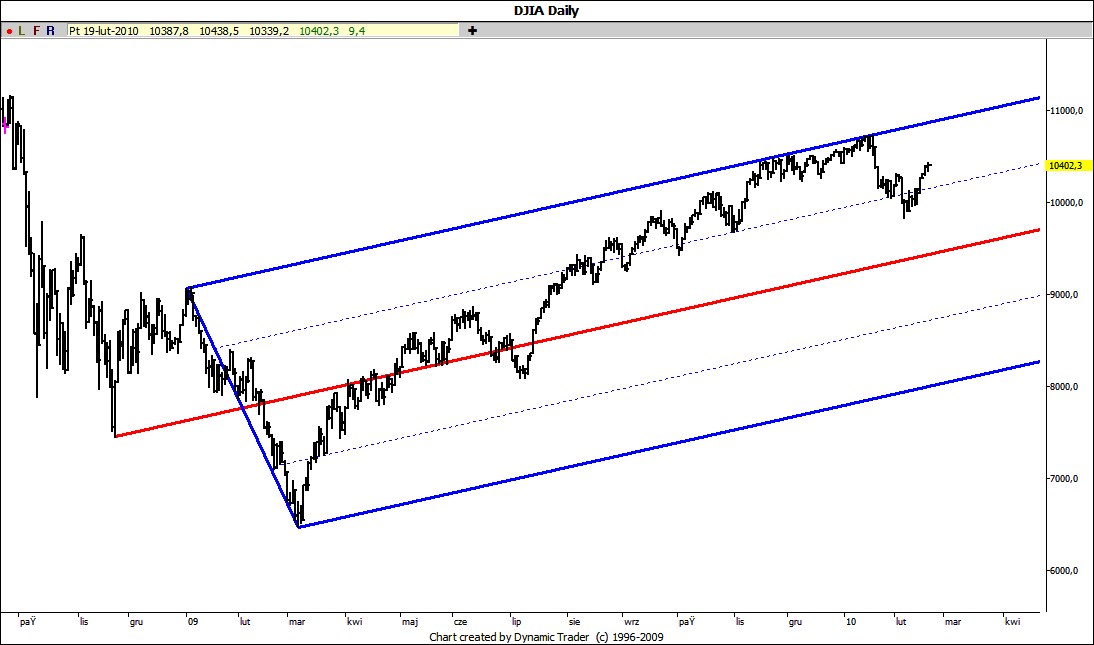
After dozen or so of unsuccessful attempts to overcome the upper ML DJIA has moved decisively into the direction of the main ML. However it didn't reach it and is now hovering around the division line:
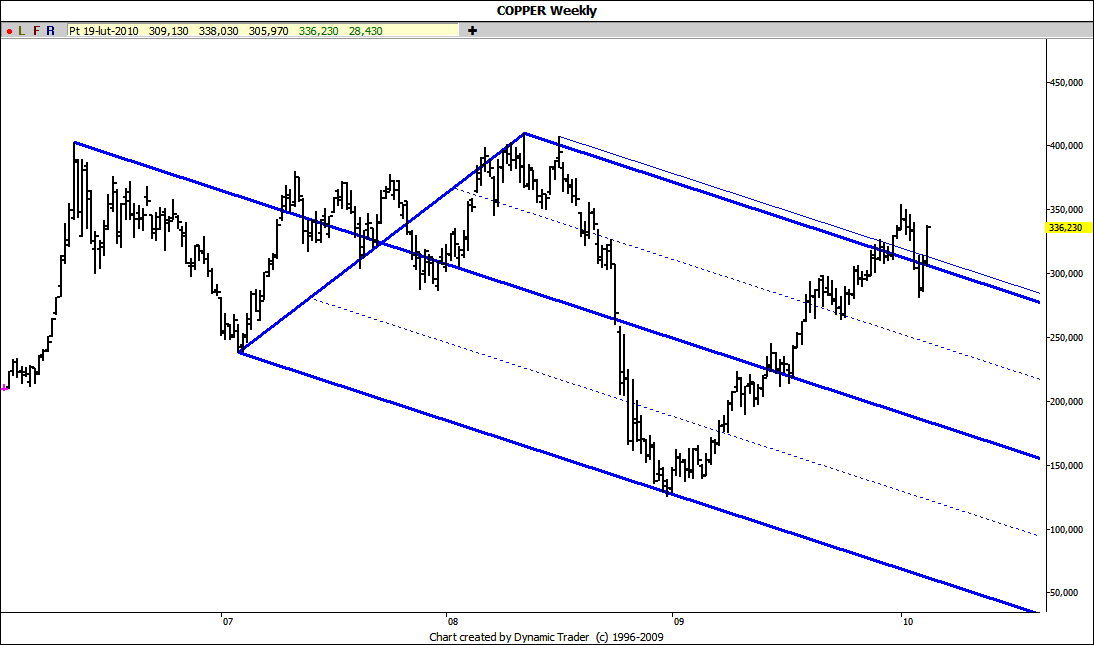
Copper shows no respect at all to its long term natural set moving through its lines back and forth:
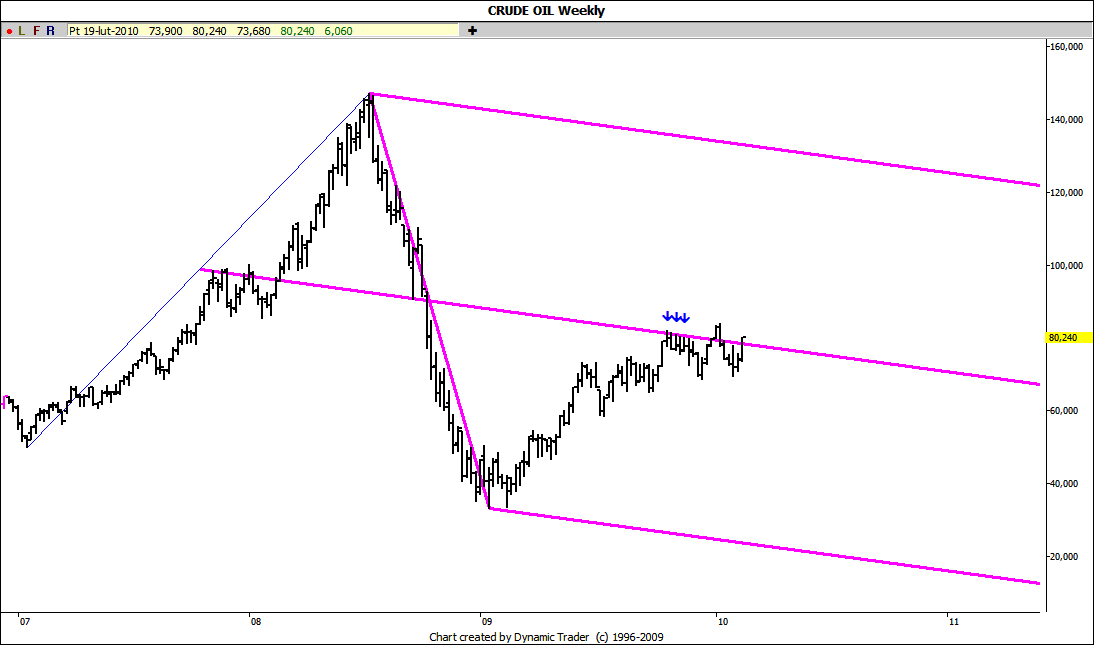
Crude is still hovering around the ML of its long term Schiff set what in my opinion looks more and more like just a pause in its long term upward march:
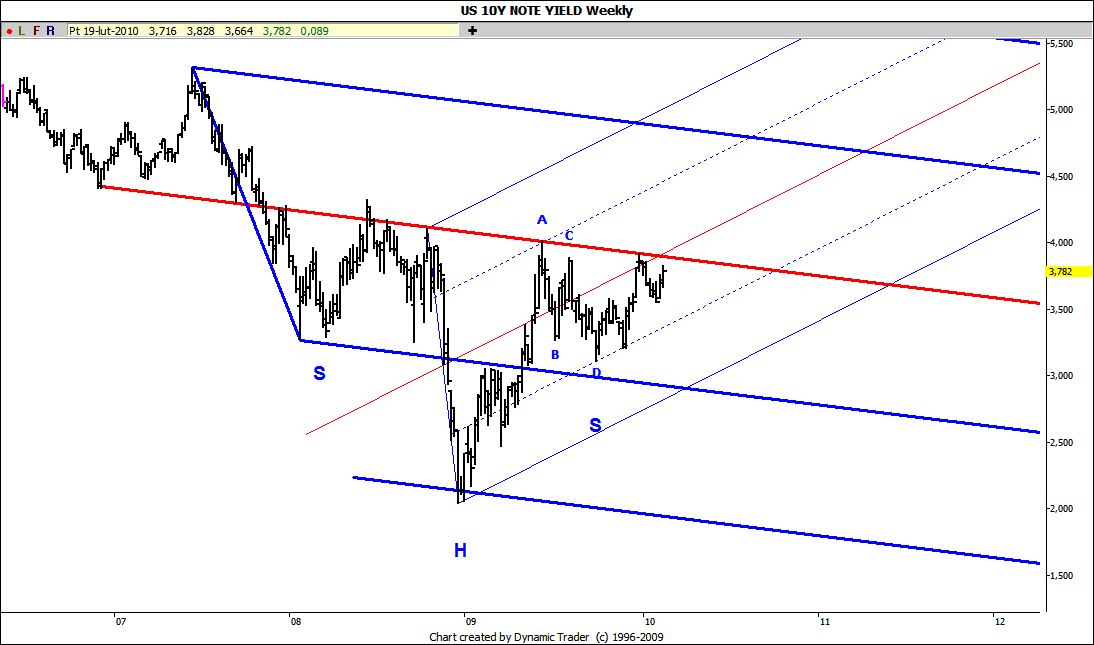
10Y yield is again approaching the potential neckline of its long term inverse head and shoulder pattern. If the rise doesn't stop here we may see much higher rates pretty soon:
JI
jimkane
Rep: 3,058
Posts: 33,089
jarek,
I have a simplified answer to your question. The detailed response is too much for in here, it would be better suited, for any that want that version, to one-on-one work with me. If my play/premise is just that smaller ABCD, then I would likely be scaling most or all of it out as it hits that .786 area in a straight shot and then starts to come back in. Play over. If I am using that pattern as an entry pattern to get in (or add on) to a play off that Feb 5th low, I'd want to be a lot more tolerant with my stop so I can stay in for a potentially bigger move to new highs for the 'bull'. I'd then have to choose a stop that was technically smart and would likely still keep me in if the premise was still playing out.
I can see that people are struggling with the idea, for themselves, of 'What is my trade premise', and how to formulate that. Each layout doesn't automatically dictate one and only one trade premise. Each layout is filled with potential possibilities, and one can craft, carve out, various potential trades that have the required expected value, and make technical sense.
The key aspect is to know what the premise is before beginning, where the areas are to watch, how to manage it (what would be technically acceptable checkbacks to want to ride out, and what invalidates the premise), does it have a clear path to the main expected area (no obvious support or resistance in the way from other areas), and so on. This is what I cover in the one-on-one, and it takes awhile to grasp and then develop the skills.