Thanks for opening this Forum to your students and giving us an opportunity to show our charts and share our ideas.
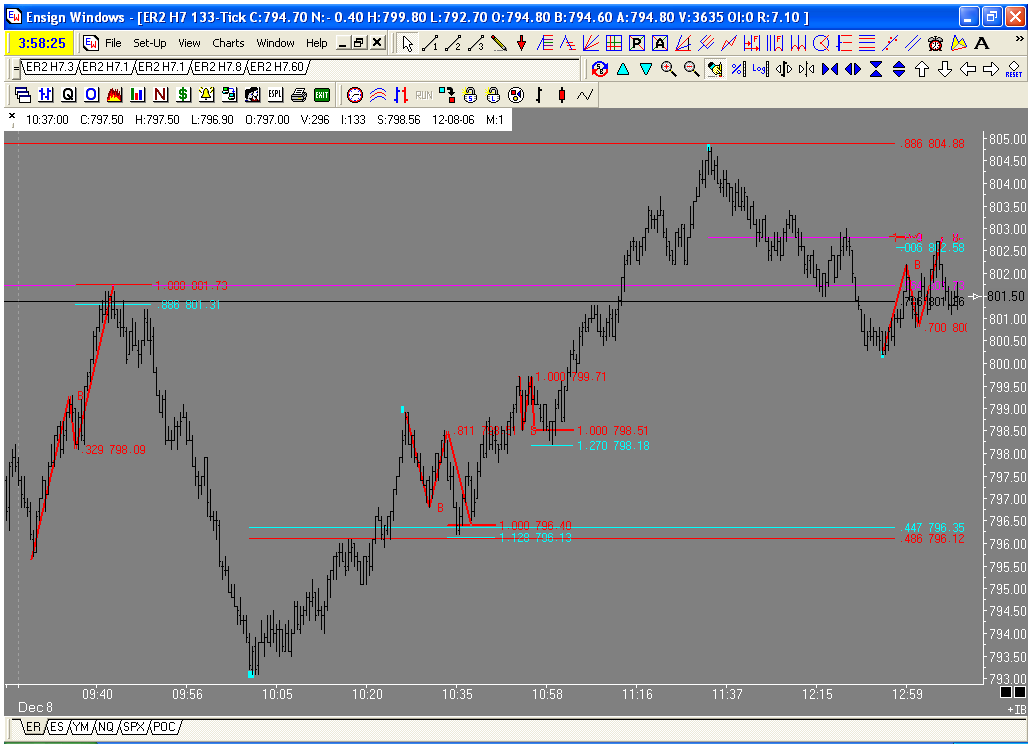
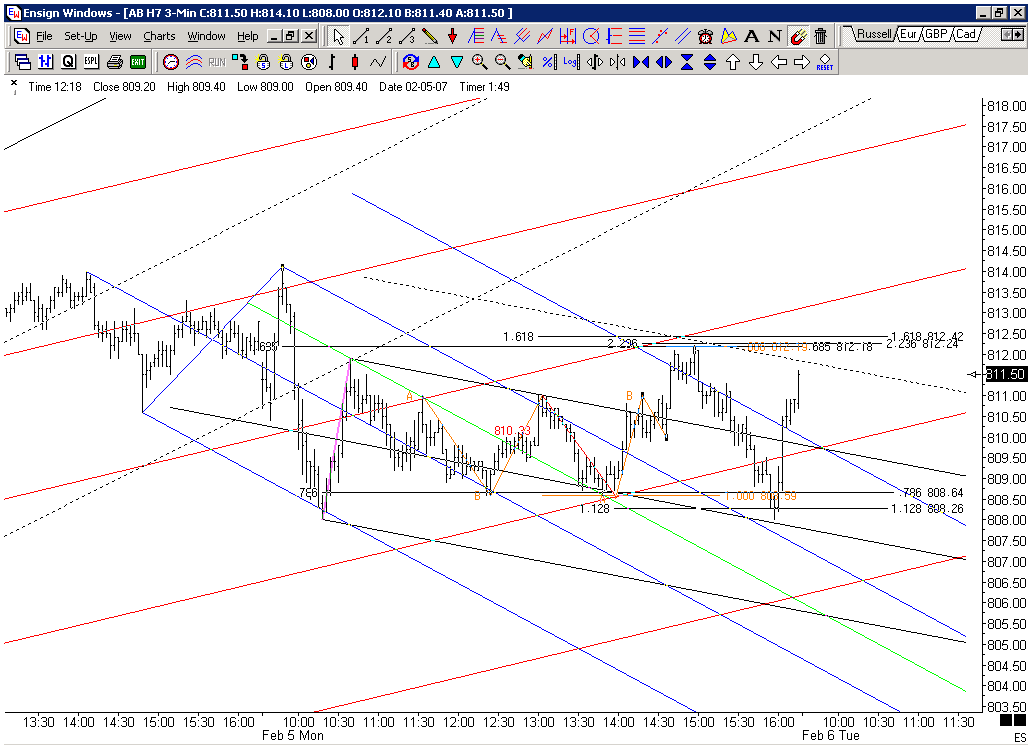
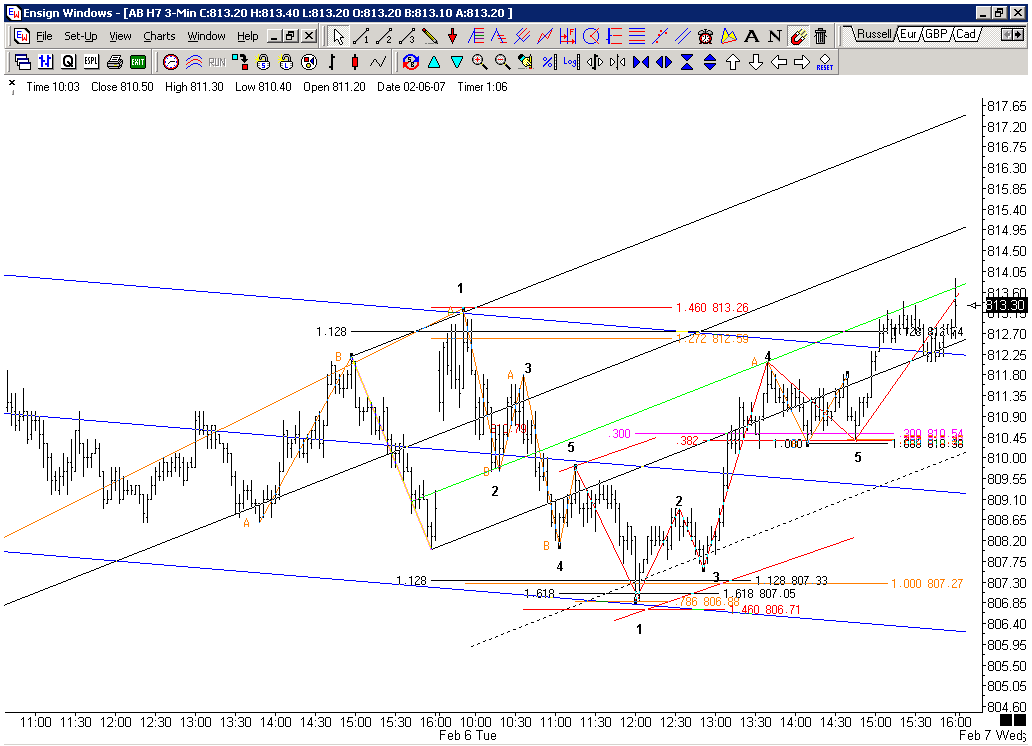
Here is a chart of todays ABCD's in the russell. I will post a context chart later. Today was one of those days where the market changes direction on Jim's unique Fib numbers, Had you been trading with standard fib numbers you may not have noticed these PTA's. Is it me or is .564 becomming more and more prevalent?
The problem with trading only one market is that you have to deal with wave 4 chop. Here is some market wisdom from Jim for all you daytraders. This is from Jim's free commentary on February 5, 2004
"Today I will follow up on yesterday's theme by showing some mini trades from today that didn't turn out to be big winners. It is a great sequence showing the reality of trading. My style of trading is a lot like professional poker. If you watch the World Poker Tour on TV you will see the similarity right off.
When you watch these guys, they fold, check, check, fold, and on and on. Then they catch something and they play it for all it's worth. It's clear that the whole tournament can be won because of just a few hands. Many people have analyzed their trading and said that they got most of their profits from just a small percentage of their trades.
I find that to be the case in my trading. The main difference between my trading now and my trading when I started is that now I'm infinitely better at checking and folding, as opposed to raising every hand when I have nothing. I'm trying to just 'hang out' so that when the trade comes that's a big one, I'm already positioned. That's what I am trying to do all the time.
I never thought that way when I first started as a trader. I thought I could tell where the big trades would set up. To me, now, at the experience level that I'm at now, I see that that would be like the poker player saying he knows which hands will be the winners, but saying it before any of the cards were known, or at best when the two hole cards were known.
This is not a perfect analogy because when you know the hole cards, you know what your starting odds are, and they vary depending on the cards. Assuming all setups that you would take would be roughly equal, you don't change your bet based on the setup. (In reality, I do just that, but I only vary the play size to a small extent.)
The point is, I have no idea which particular setups will 'play out'. I feel that there is no way to know that. It's a probability game. So I try to check, fold, fold, check, and wait. I want to be there when the big one comes. I'm spending a lot of time on this, but it really is a huge part of what I feel jumped me up the skill ladder.
If I call my potential trade areas correctly and wait for confirmation, I almost always get a 'pop' out of the gate. If I scale out of part of my trade on that first thrust, I can move my stop up at that time, or shortly after that. I'm now in a no lose situation, with 'no lose' defined as breakeven, very small loss, or very small winner, barring a market shock event at that instant.
This is where I want to be. I'm in, and my 'theoretical' risk is essentially gone. Check, fold, check… Then some percentage of these trades will take off and I'm in. That's where all the money comes from, in my 'Trading Plan'. In 'the old days' I had big targets, the targets that I laid out based on if the trade 'worked'. I then held firm to my stop, and got stopped out at a reasonable sized loss.
The problem was, I got stopped out a lot. I hit the big ones because I was in, but the 'small' losses just added up to more than the winners. I had a favorable reward/risk, but the winning percentage just wasn't enough to be net positive. I never was able to get the winning percentage high enough to overcome all the stop outs. I used to focus all my time on improving that winning percentage (see my free article The Myth of Predicting the Market.)
Then I started to develop what is now the Kane Trading methodology. Now I have few losses to make up. I have a lot of breakevens, a lot of tiny losses (by comparison to a full stop out loss), and a lot of small winners. Then I have a few trades (on a percentage basis) that I really catch. It's not glamorous, but it's the only style that I've really found that I can work with.
This style may not be for everyone. I'm showing it because it's what works for me. I suggest readers look it over and experiment with it, and see if it can help you. A perfect example is the FDX trade. Let's assume for the sake of this example that FDX didn't gap up and I got in near the potential trade area.
In 'the old days' I'd still be sitting on a full position in that one, holding tight to my stop, which perhaps would have been moved to break even. I'd be out, or ready to get out, with nothing to show for it. If I had left the original stop in place, I'd be set up to let a winner turn into a loser. Instead I take some off and move my stop up, and then take the rest off as it falls, and walk away with something. Check, check… It wasn't this one. It was VTSS, though. PDLI, fold. Deal the next hand, dealer.
MR
mreiserer
Rep: 110
Posts: 2,220
0
Great Stuff.
JI
jimkane
Rep: 3,058
Posts: 33,089
0
Nice post, Duane. Do me one favor, though, when you quote, and that is cite where it came from, like free commentary from this date or, this book, or whatever, so people can follow up more if they want. You sure do study my work in detail.
DU
Duane
Rep: 100
Posts: 1,095
1
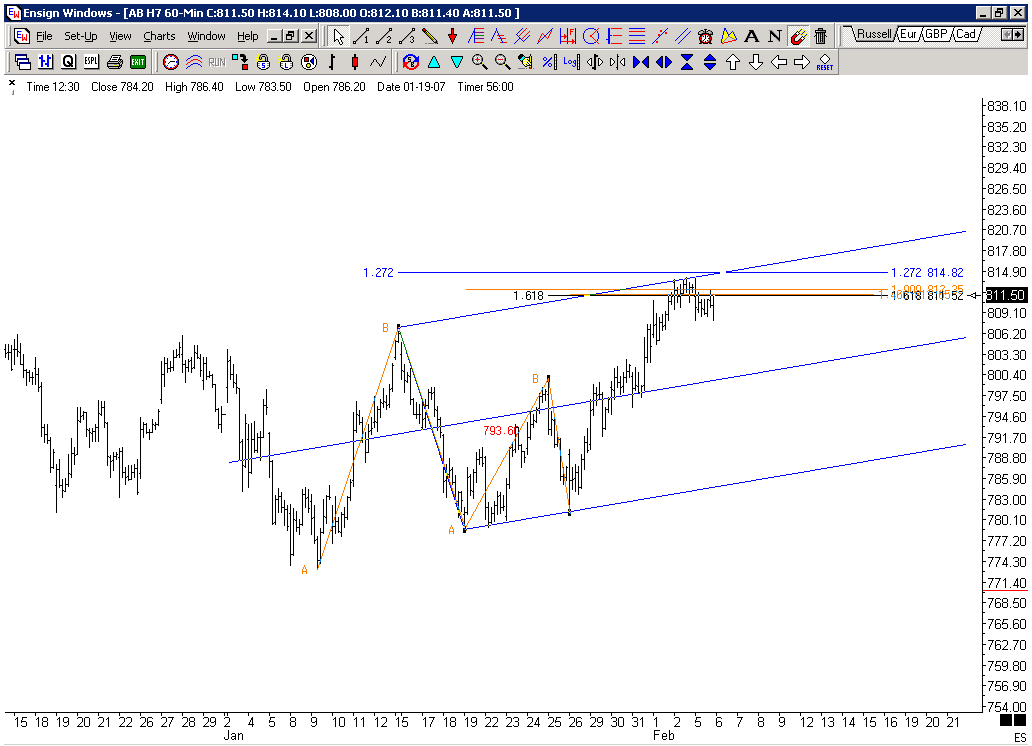
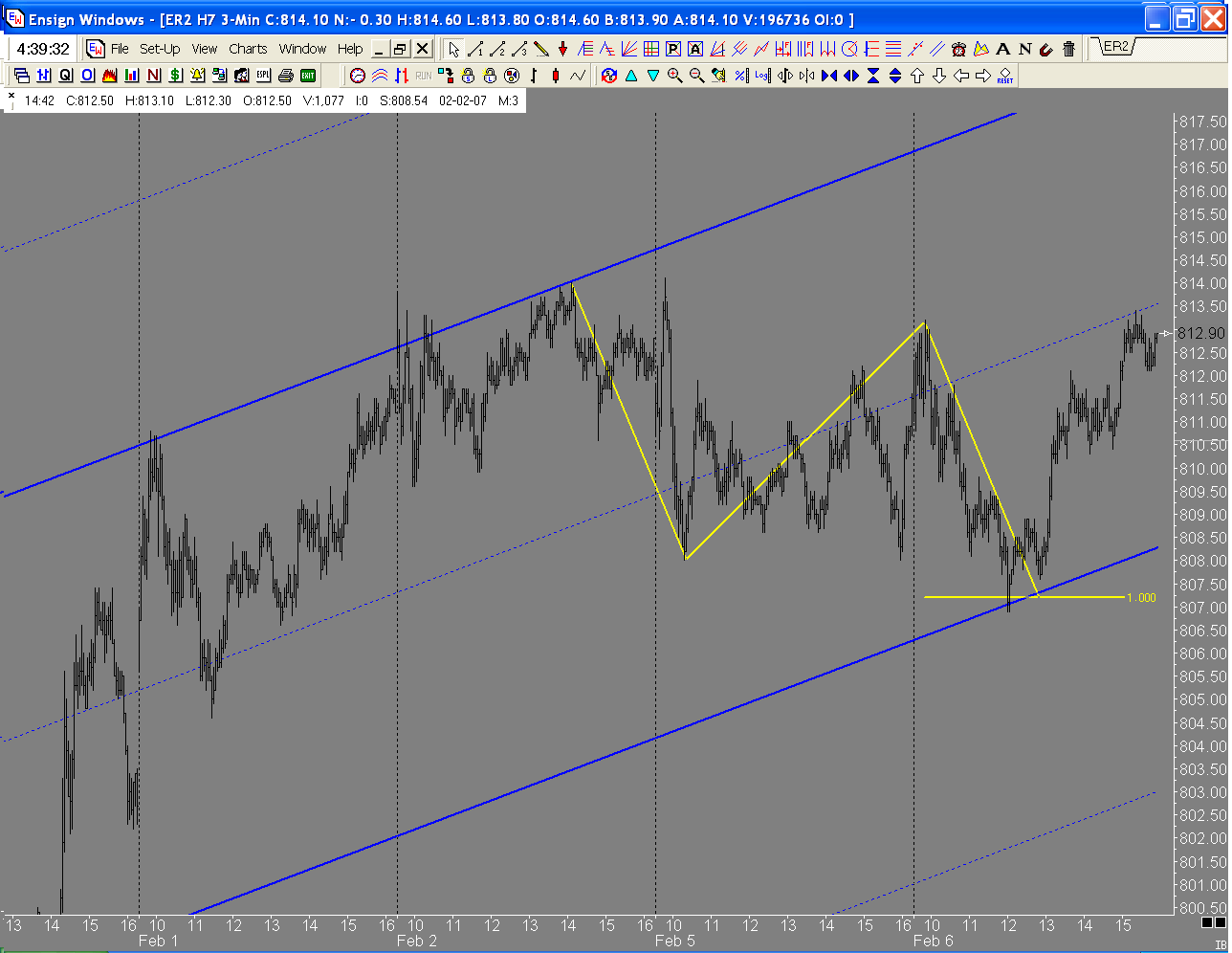
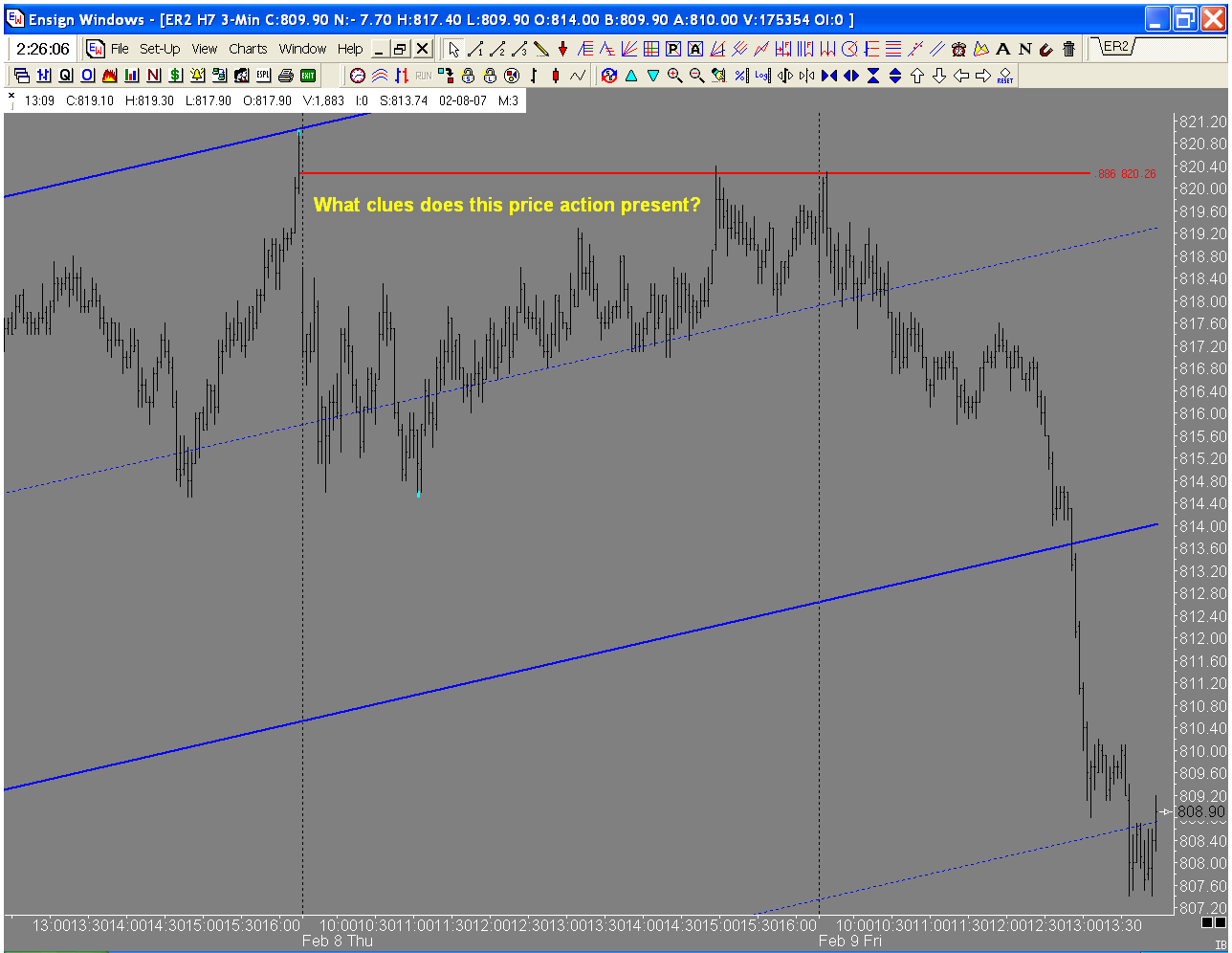
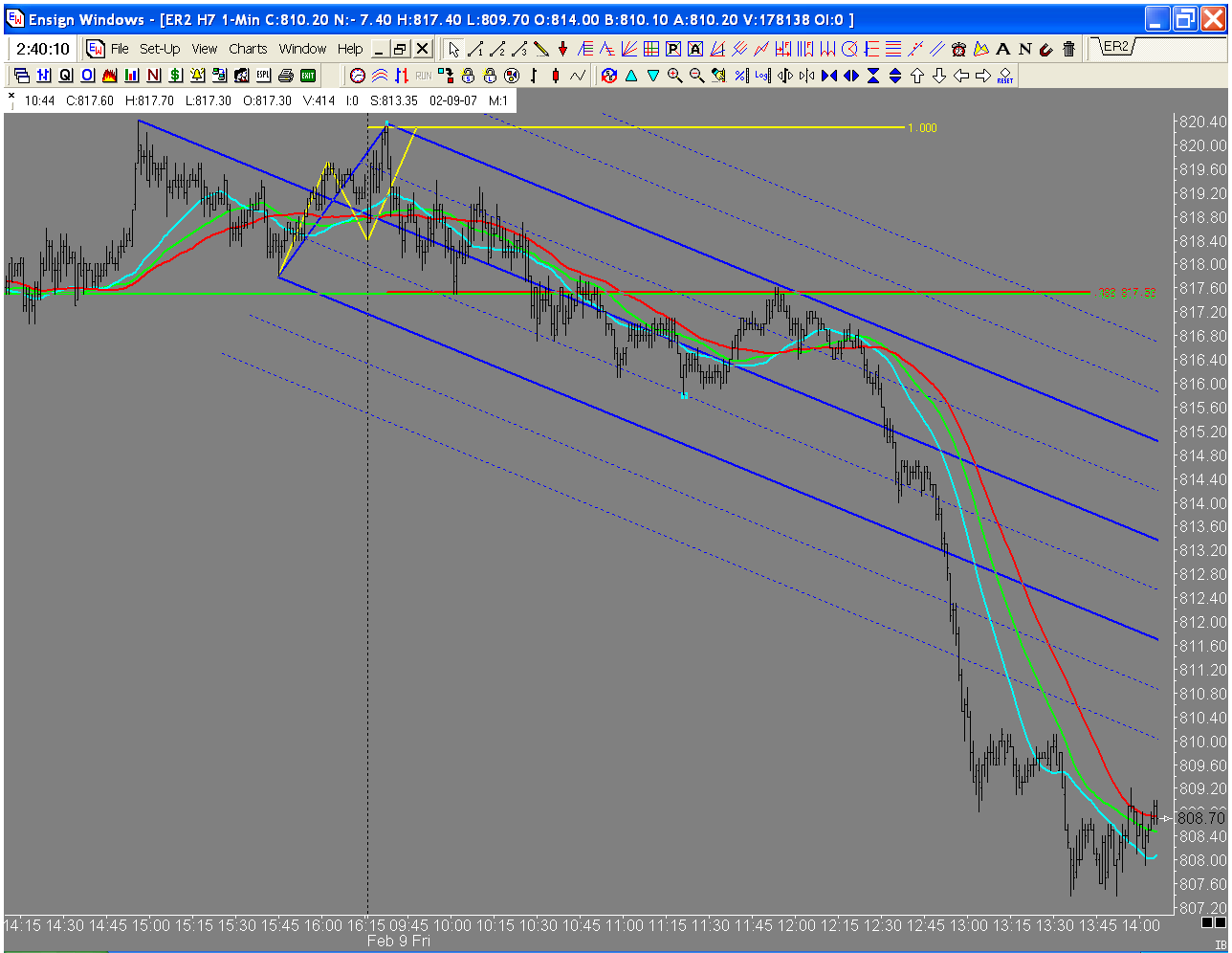
Larger timeframe set on smaller timeframe chart provides context.
Thanks Jim!
Click image for original size
MR
mreiserer
Rep: 110
Posts: 2,220
1
(Edited )
It was fascinating to watch how everything moved in clear 5 wave counts today. 1 down, 1 up.