quote:
Originally posted by TonyC
J,
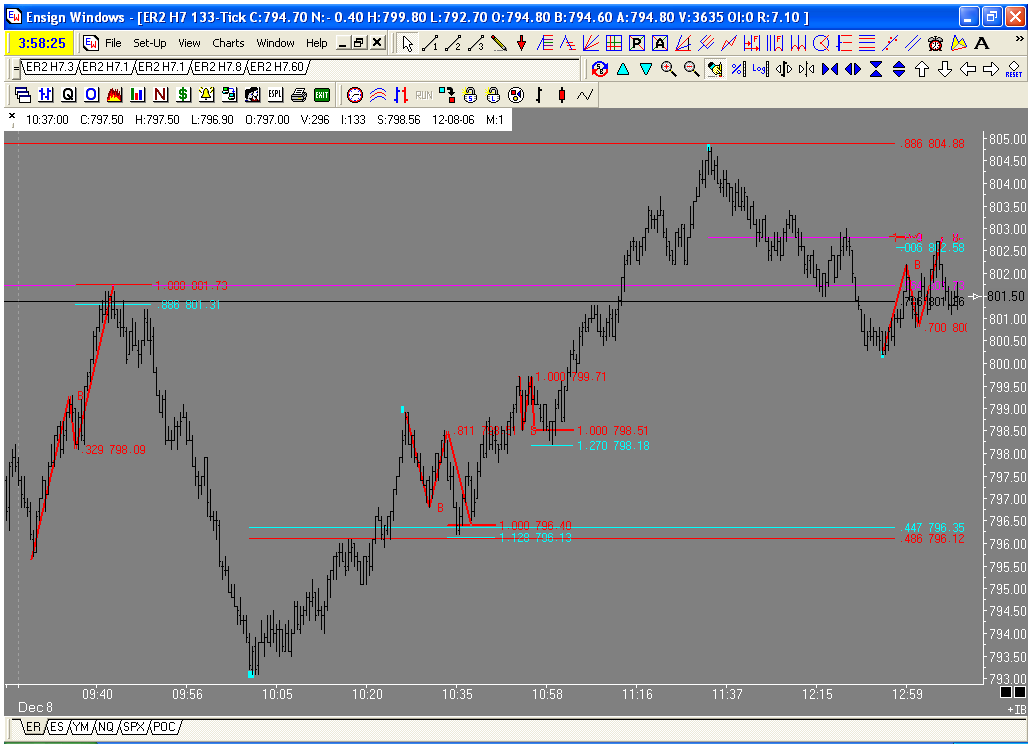
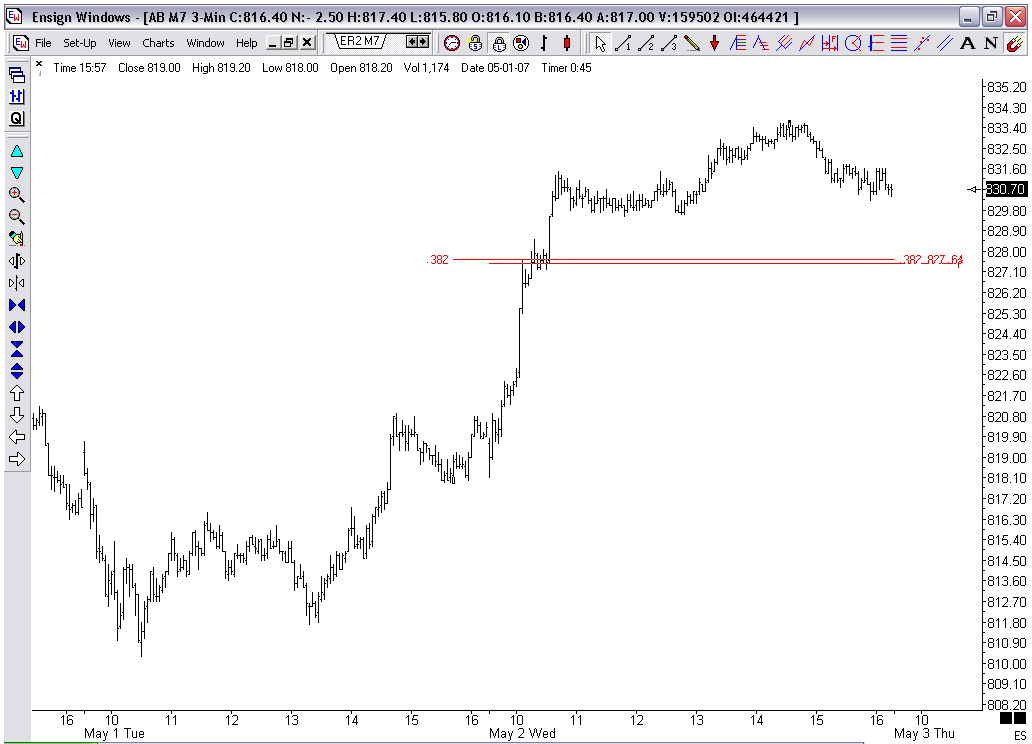
is there a good way of filtering the price action for trend 'chopiness' level.I mean a threshold limit of sort that could help define the tradability of a given trend.I've tried the 'chopiness' indicators but failed to get anything consistent...
I now mainly use a visual "scan" and assess the situation but that is still subjective to me and I end up trading the setups anyway ,even though the 'chop' is rather obvious.That's overtrading on my part, I admit, and the results are often stopouts after stopouts...not cool at all.
I wonder what method u might use in these situations,if any, to actively trade or move to the sidelines due to the choppiness of the price action.What 'tool' do u think is useful to help make a decision on that?
=)
T
T,
Sorry this took me so long. I've been thinking on how to answer this all this time. Unfortunately, I really need a lot of time and space to impart all my thoughts, and I can't do that in here, it's just not the proper venue. I've been trying to think of how to do a condensed version. I decided just hit hit some salient points, and that's the best I can do.
- Although there is chop on all timeframes, there seems to be added chop in the mini's, for example, on the lower intraday timeframes, mostly due to the hedgies and the insane levels of program trading. So, by focusing on the higher timeframes, well up from 3-minute, you lose a lot of that additional noise.
- I also try to focus on playing lower timeframe plays off higher timeframe setups. The higher I can go, the bigger the response will be if it plays out. That gives me a chance to read the action, let it settle a bit, and then try to construct a play. If the setup is on a 3-minute and I try to hit it as soon as I get an entry trigger, that's very prone to noise and chop. If a trend is unfolding off a 60-min setup and I have an idea where in the trend I feel I am, I can try to 'work' the smoother 'wave 3' area.
- I try to avoid mid-day unless it is an accumulation or distribution day, and that is a clear thing to see. They are either buying or selling relentlessly. So, unless a sweet higher timeframe setup comes together mid-day, I try not to think about initiating new plays then.
- I never try to guess my way out of a range. When it starts going sideways, forming one little pattern after another, each proving to be yet another go nowhere headfake to catch stops, I'm standing aside until a bigger setup outside the range comes together. An exception is when it does this and a big setup is off to the right, and I can see it is just burning time waiting to hit the line. Then I will sometimes consider that area anyway.
- I look to play other things besides intraday mini's on short timeframes. They are the king of chop, and an open invitation to join the chopfest and get sliced to ribbons. One can look for things that are trading nicely and setting up nicely. I like to play where the action is to my liking. Roofer is a master at this concept. It is a real downside to trying to only trade one instrument on one timeframe. I have a lot of aspiring traders tell me they are planning to trade the mini's intraday for a living, and that's it. If something starts trading poorly, I'm working elsewhere, I'll tell you that. I go where the action is.
- They say in business the three most important factors to success are 'location, location, and location'. Trading, as we discuss it here, is a business. As I mentioned in the last entry, location can be critical. I can also modify it a bit, too, and say 'selection'. In trading, there are three critical factors in choosing a trade: 'Selection, selection, and selection'. My advice is: 'Choose wisely'. That's why I quote that line from the movie War Games all the time: "Strange game. The only winning move is not to play." Sometimes there is no trade at that time in that instrument.
- Overtrading is a serious issue, and it is perhaps a way bigger issue than most acknowledge. Most of the time I am just sitting, waiting for all the ducks to line up. Truth be told, for the timeframes I like to work intraday (leaning towards 13 and 60-minute lines and setups), there are between 1-3 setups per day, at the most, on average. Some days have none. It takes a lot for me to consider risking capital. Roofer has a saying on his comp 'You can make money or you can make excuses, but you can't make both'. In that line I think aspring traders should also be thinking 'You can trade like a professional, or you can trade like an amateur, but you can't do both.' If one is serious about this business, work on your head, too, and get that in your written plan.